3D scanning at up to four cubic metres
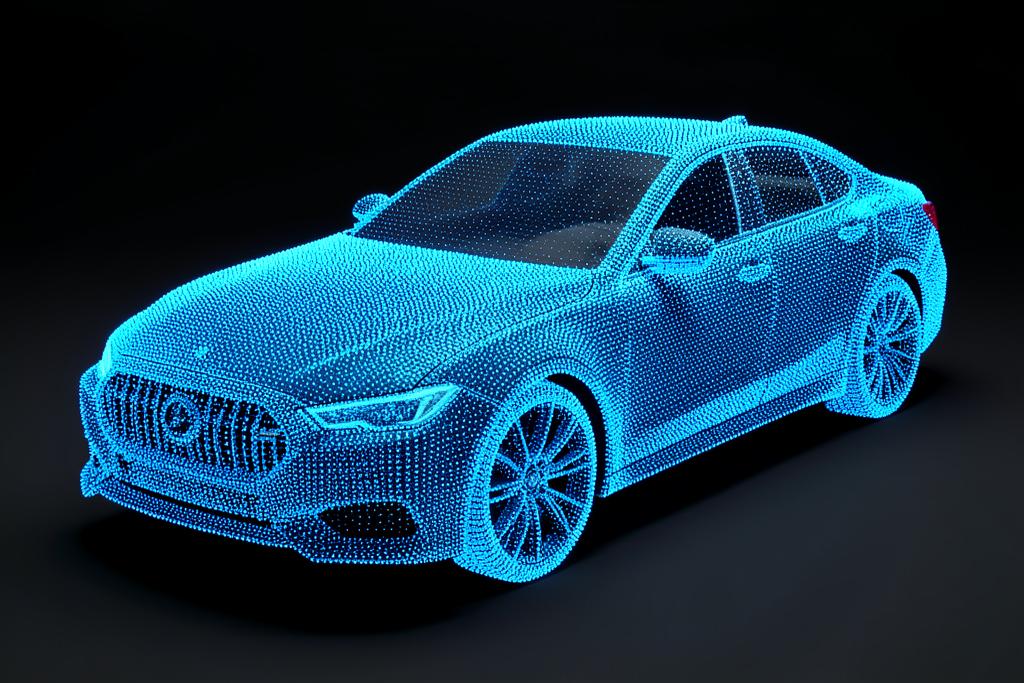
A 4 m³ maximum scan volume means the same workflow covers a fist-sized casting and a complete vehicle interior. Scan data comes back as usable engineering geometry, not just a pretty mesh.
Reverse engineering
Obsolete parts, hand-modified components and anything without drawings can be captured and rebuilt as parametric CAD in Fusion 360 or SolidWorks. From there it can be modified, improved and put straight into production.
Fitment and packaging
Scanning the space a part has to live in removes the guesswork. We capture engine bays, cabins, bulkheads and airframe sections so new components are designed against as-built geometry rather than nominal CAD.
Inspection and verification
Scan-to-CAD comparison shows where a manufactured part deviates from its model, with colour deviation maps and dimensional reports for sign-off, warranty investigations or first-article inspection.
On-site scanning
The scanner is portable, so large or immovable subjects can be captured at your site — vehicles on a ramp, tooling in place, or assemblies too large to transport.
Key specifications
- Scanner
- PROFESSIONAL GRADE
- Max scan volume
- 4 m³
- Min part size
- From a few millimetres
- Modes
- BLUE LASER & INFRARED
- Markerless capture
- Supported
- Colour texture
- Yes
- Mesh formats
- STL · OBJ · PLY · 3MF
- CAD deliverables
- STEP · Parasolid parametric models
- Reporting
- Deviation maps & dimensional reports
- Location
- In-house or on-site
Typical subjects
- Vehicles
- Full bodies, interiors, engine bays
- Components
- Castings, brackets, ducting, trim
- Aerospace
- Airframe sections, tooling, jigs
- Heritage
- Obsolete or one-off parts